At a glance
A structured interview can serve as an assessment when its questions collect job-relevant evidence and its answers are evaluated consistently. Reusing that evidence may remove a separate candidate task. Keep additional assessments when they demonstrate capabilities the interview does not adequately measure.
How can an interview become an assessment?
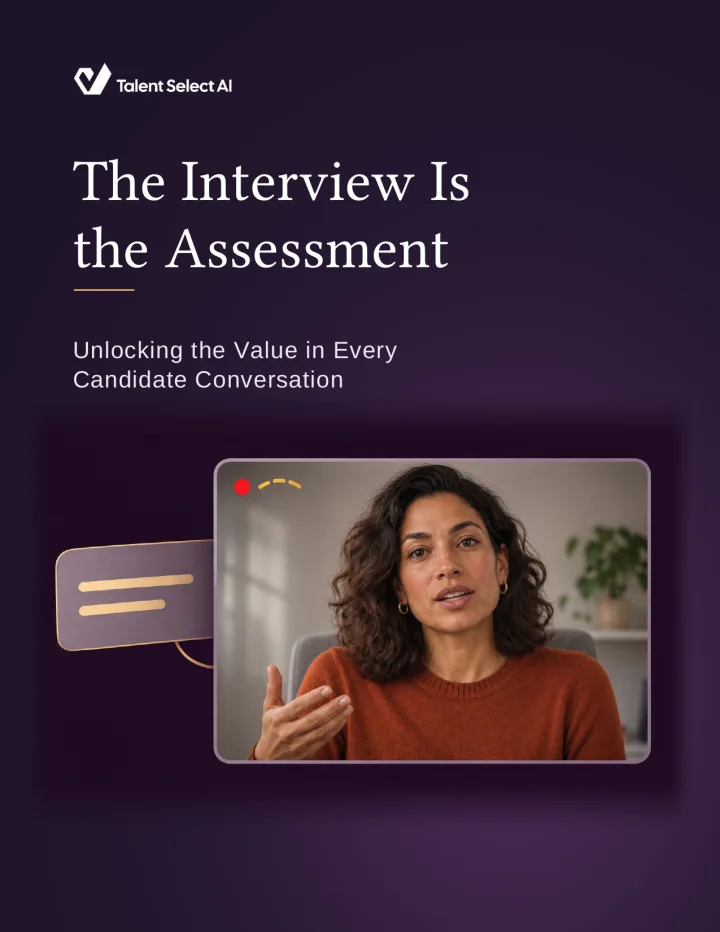
Candidates already describe decisions, actions, and outcomes during interviews. A systematic evaluation can turn those responses into evidence about relevant competencies and motivation. The key is to define what the role requires before deciding what an answer means.
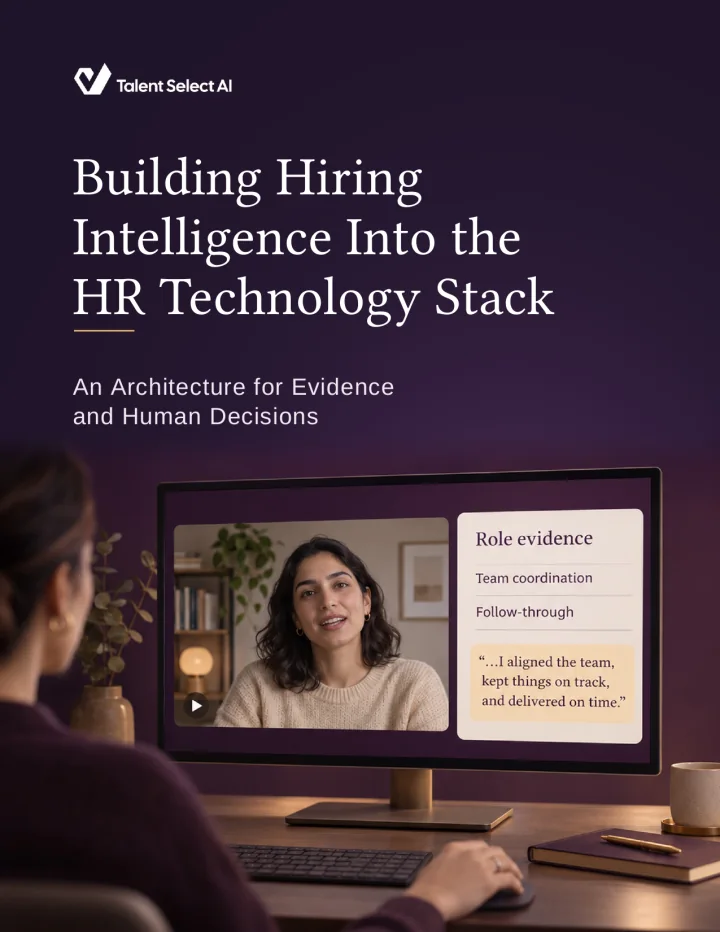
A story about rescuing a customer handoff might reveal how someone checks conflicting information, coordinates owners, and follows through. Treat those as distinct pieces of evidence to examine, not as permission to infer every capability from one polished story.
What makes interview evidence comparable?
Structure both the questions and the evaluation. Give candidates for the same role a comparable opportunity to describe relevant behavior. Agree in advance on neutral follow-ups, rating criteria, and how to handle insufficient information.
Have interviewers record their judgments and supporting details before discussing the candidate as a group. Use disagreements to revisit the evidence and rubric. A shared standard can coexist with a welcoming conversation and time for the candidate’s own questions.
- Start with the job’s critical tasks and capabilities.
- Ask a shared core of job-related questions.
- Anchor evaluation in the behavior the answer shows.
- Keep missing evidence separate from an unfavorable rating.
What does the published research examine?
Campion and Campion studied natural language processing dictionaries applied to narrative information already collected during selection. Their six studies covered 12 samples and 67,652 cases across employment and educational settings. Talent Select AI supported the research on the foundational methodology behind its assessment technology.
The research examines relationships with selection outcomes and some later performance measures, including incremental prediction in relevant samples. It is not a guarantee that any interview or any automated scoring system will produce the same practical results.
When should you keep a separate assessment?
Keep a separate exercise when it supplies distinct, necessary evidence, such as demonstrating a technical task. Consider removing a step when it asks for information a properly designed interview already captures. Sharing a platform does not by itself make two candidate activities one.
Pilot the change on one role. Compare the evidence available to reviewers, candidate completion and effort, support needs, and recruiter work. Talent Select AI offers a Complete ATS, Interview + Assessment for an existing ATS, and a Developer API for teams embedding the assessment in their own workflow.
Sources and further reading
This guide is adapted from Talent Select AI’s white paper. The research below examines the foundational methodology behind the assessment; Talent Select AI supported that research. It does not certify a product or establish suitability for every hiring use.
Download the complete paper for the full discussion and reference list.